Medical education needs to change. Weight stigma is taught.

Healthcare professionals are not infallible and have their own biases

Apologies in advance for probably a relatively ranty post.

I am not considered overweight, I have been at the complete opposite end of the spectrum and have been often rewarded by health care professionals for being “healthy” when I was slowly killing myself.

When I was considered emaciated this positive reinforcement shifted, I met a lot of stigma from healthcare professionals.

Today I have just experienced horrific weight bias whilst at a medical appointment. A nurse who had my medical record on screen, open in front of us displaying my history: Anorexia nervosa.

Whilst I sat there she began to discuss how next week brings the onslaught of patients booking in for weight maintenance, counselling after “over indulging in the holidays”. She was clearly ignoring this history. She continued with her opinions and judgements regarding patients eating “bad foods” and expecting to lose weight.

My response was somewhat blunt, probably rude. I wish I was brave enough to point out my history but instead I shared my very anti-diet views. Explaining I do not believe in the multi million dollar industry that promotes dieting. I explained if there was a diet that genuinely worked the industry would not be in business. If people successfully reach their goals and stayed there there would be no diet industry. But I explained that simply doesn’t happen and leads to obesity. She went on to demonise foods. To me.

She started talking about a group of people who exercise every day “and aren’t overweight” and do not lose weight. She stated it’s because they aren’t dieting with it. “You can’t do one and not the other” if you cut out rubbish you will easily lose weight she went on to express. She told me how cutting out “unhealthy food, sugar” it’s easy to lose weight.

At this point I was like, are you fucking serious. You’re sat telling a patient in recovery from anorexia about losing weight and demonising foods and promoting the idea that weight gain is to be feared by anyone.

Again, I wish I had felt stronger to call her out. But there’s still a part of me that can’t quite do this in an non anonymous setting. I will get there.

It got me thinking and really feeling for patients. If someone with a history of anorexia, not that long in recovery and not overweight can be subjected to this. Then people who are considered “over weight” according to a BULLSHIT MEDICAL INDEX scale, aka BMI then this is horrendous. We are terrible in the health industry and really under educated in this area. This is one of the reasons I started this blog. To educate and reduce biases in health, society and reduce stigma.

Stigma does occur in very low weight too. When I was very unwell, doctors told me I was irresponsible, like it was a choice. I was marched across busy waiting rooms and made to step on the scales in front of audiences and then condemned publically if I’d lost weight or not gained. I remember one occasion being made to walk up and down a corridor (waiting area) by a GP to make sure my heart wasn’t failing, and saying aloud if you don’t put on weight by the next review you will be forced to be admitted. This is fucking awful when I think about it now.

Scales can be terrifying to someone with an eating disorder ( or no eating disorder)

If you are a healthcare professional: keep your own biases and fear of weight gain to yourself.

If you are knowingly looking after someone with an eating disorder it is highly inappropriate to make them step on scales with an audience, if you must weigh someone keep it neutral without judgment. Scales are one of the scariest things you can ever imagine for someone with an eating disorder, underweight or overweight. In my opinion scales in a hospital or doctors should not be in a public area.

If you have ever experienced stigma, judgement by a healthcare professional I am truly sorry. One day I hope we can shift the narrative. If you feel brave enough and you find yourself in a similar situation to that of mine today, please speak up. I promise I will try to myself next time.

Your eating disorder is a liar.

Eating disorders manipulate

Eating disorders pretend to be your friend. They are anything but a friend. The lies an eating disorder tells, or criticism it shouts at you 24/7 are far from what a friend would say. It is a contrast to how you would talk to or treat a friend. In fact you’d probably wind up in prison if you treated a friend how the eating disorder treats yourself.

But yet, they are seductive and mendacious.

Eating disorders are sly and cunning, and often start out with subtle changes “to be more healthy” etc.

But at some point, a switch gets turned. Your healthy voice dissapears and the Hitchhiker that is the eating disorder takes front seat, planting lie after lie in your brain.

Initially your healthy voice challenges this Hitchhiker. But to no avail, and soon this healthy voice gets lost and almost forgotten about after constantly losing the inner battle. 

You may not even recognize this is happening until you start recovery, to bring back this healthy voice in an epic battle of the voices. The healthy voice, although silenced is still there.

Instead you have spent so long believing the lies and deceptions of this hitchhiker.

But, your eating disorder will always lie to you. Some lies my eating disorder told me:

1. If I control my intake to the finest detail I will be healthy and clean

2. “You are fat”

Even though at heart I knew this was a lie and didn’t care about size the constant bombardment eventually made me believe it and not see through the distortions. It’s like a smoky mirror. It’s a deception and becomes increasingly distorted . When I used to challenge this lie, I was met with you need to lose more. The “HH was never satisfied. It never will be satisfied not matter how much you lose”. The Eating disorder wants to kill you, that’s it’s end game.


3. “I am not sick enough” to need help/ I do not deserve help.

The eating disorder will never allow you to see how grave things are. Additionally there is no such thing as “sick enough” if thoughts are consumed by rules, obsessions and you are not mentally free you are sick enough. If you do not believe you are sick enough, this is a symptom- you are sick enough and being lied to by your ED. Any disordered behavior or thought is harming your mental health and physical health. “HH” had me believe that because I had gotten through college, Med school and was working I didn’t have a problem, but my life would have been so much easier if I had more brain capacity and stopped believing the deceptions.


4. “Food has to be earned”

Food is a basic human need. No one ever has to earn or compensate for food. But my “HH” told me I could only eat under very strict, rigid circumstances. When I ate I had very explicit rules about compensating. All because I was being LIED to. This still bleeds into my recovery now. I have rid myself of behaviours but periodically the lies creep back about what I should do to “deserve” or make up for. For me this shows up at unknown situations (holidays, Christmas, or trying new things) I have to work hard to challenge this. Otherwise you will never be free of the rules (lies)

5. “Recovery will make you fat

Recovery will make us many things, free and alive being the most pertinent. But the lie that my eating disorder tells me- “your therapist and family will make you fat”.

Now, realistically who gives a shit if this is actually the case? The eating disorder. Fat is a disordered, unkind word. So let’s challenge ourselves. It’s fat phobia and it is wrong. We should be promoting the Health at every size concept.

Aside from this our bodies have a set weight it likes to sit around- we can’t choose it. It is what it is. Some of us may temporarily “overshoot” this set point because it’s necessary to recover. But the body will work shit out when we stop listening to the lies.


6. “Recovery means losing control.”

I believe many people with eating disorders will identify with this fib. And let me affirm it’s a massive lie. It’s a way the eating disorder is trying to hold onto you. Having an eating disorder means you have lost control, it gives you a false sense of control. People don’t lose control when they start to recover. Our eating disorder makes us think that controlling our body shape and intake is a form of control but it’s far from control it’s controlling us. I feel far more in control now than when I was meticulously trying to control everything, because you can’t control everything. My anxiety has never been higher than when my days were led by rules constant lies and trying to see through the fog.

If I had of been in control there’s no way I would have missed out on social engagements for fear of eating or life events to sneak in that extra workout to make up for having to sit an extra 30 seconds in a meeting? No, don’t be fooled the eating disorder has control until we take it back.

7. “Eating in front of people makes me weak”

This is the eating disorder thriving on secrecy and shame. Eating is a normal behaviour and often social building connection. Connection’s something the ED fears.


8. I am a failure if I give in to hunger, break a rule

I doubt in 10 years from now I will give a flying f*ck about the biscuit I just ate, but I will remember the years I missed out on them and the part of my life I gave up for it. Hunger is normal, ignoring it does not make us super human or strong. It made me fucking miserable.


9. “Bad things will happen if I break my rules/ rituals”

I have co-existing OCD. So my eating patterns followed strict rules and breaking these or not carrying out rituals provoked immense anxiety. If I messed my routine up or someone interfered I would go into full blown turmoil. I had specific utensils, cleaning rituals etc. On one occasion my mother in law came to visit, unknowingly used my “special spoon” and I had an absolute shit fit like a crazy person because she had used it. No one could use it except me and I couldn’t eat without it!!

The more lies I heard the more rules I developed. Now in recovery, having broken the rules, nothing bad happened, no one died and I don’t blow up over someone using a spoon! I don’t have to clean the kitchen from top to bottom before every single mouthful.


10. “You look better the thinner you are”

The truth is we are not defined by our appearance or number on the scales. You will never be thin enough for you eating disorder until you’re dead. It would have you to shrink until you don’t exist.

11. Food is either “good or bad”

I had list after list of condemned food. My “good” food list became almost non existent where all good became terrifying. No food is good or bad. It’s just food.

12 “Emotions and feelings should not be felt or shared”

This was a huge one for me and I believed showing emotion or vulnerability was a flaw rather than an attribute. I defined myself by this. Without realizing, for so long I had turned to this destructive force to numb out any difficult emotion as a maladaptive coping mechanism. The eating disorder convinced me this was strong and desirable rather than an avoidance mechanism. But by acting on the lies and behaviors eventually you fall into a trap of further despair living life bound by rules and fear. Everything is numbed. It’s an existence not a life.


13. “All exercise is good for you”

This for the majority of the population is not an unfair statement taken at face value. But when you are lied to by your eating disorder and made to believe that you must exercise to compensate, debt, whether injured, tired, unwell or to punish yourself maybe not so true. I’ve shared previously compulsive exercise is one of the biggest things I am having to over come. I didn’t think this was a problem or real. But compulsive exercise is very common in Eating disorders and very real.


There are so many other little lies my eating disorder proclaimed, but I feel these are the biggest and worth sharing. I imagine some of the lies your eating disorder tells you will be similar and there will likely be others. The important thing is knowing they are lies and can be challenged to reclaim your truth.

Surviving Christmas diet speak in eating disorder recovery…

I love Christmas. I used to start getting excited for Christmas in September. The air smells different, the trees change and nights get shorter and staying in on a cold winter’s night with a festive movie is magical.

I still love Christmas. But Christmas can be a challenging time for many people especially people with eating disorders or recovering from eating disorders. It can invade every waking second, robbing the joy and replacing it with fear and dread. Let me be clear it is NOT just about food. Eating disorders are not just about food. They are so much more complex than this. People with eating disorders feel so much pressure, and that they cannot share this because it’s not festive or worry about disrupting the joy.

It’s a time of year where celebrations continue for most of the month (covid aside). Even in isolation the social media, the promotions during this time and messages about new beginnings in the new year etc.

Eating socially becomes more prominent. But at the same time people start discussing New Years resolutions, which inevitably involves shitty diet talk. This is so hard for people in the midst of their eating disorder or working hard to recover. Where it’s normally easy to excuse yourself from the bull shit diet speak, or judgement around food it’s harder. Often it can include spending time with people you haven’t seen for a long time (probably not so much this year) but that can be daunting and the fear of comments even when well meaning can be hard! If you are in that situation, try and be kind to yourself and see it as a positive. And the comments such as “you look well” probably are genuine and mean you look well and that you just simply no longer look like you’re dying, it’s not saying you look fat or whatever else your stupid ED tells you.

You are bombarded with conflicting messages, unhelpful quips, comments that even for those of us who are solid in recovery can be really fucking hard. The classic I will have to run this off, I’m going to be so fat, is that all you’re eating, you’re eating so much are all likely. Be ready for them and choose to stay on track. How you respond to the comment is up to you.

I have noticed myself this last couple of weeks, I’ve had to work really hard to check myself as thoughts have slowly crept in about ‘how much I should be eating, moving, what’s not “allowed”’ all bullshit and all because of the time of the year and the inevitable society pressures.

In a way it’s helpful, because although frustrating as it is to be experiencing the thoughts and anxiety return, It highlights there’s still work to be done. Clearly I still have a lot of re-wiring to do. I still clearly have an irrational fear of weight gain, which I thought I was passed. But that’s what it is, an irrational fear. It’s a phobia and it’s ingrained through the years and years of inappropriate reinforcement. It’s not surprising that events ignite these brittle pathways. I have not engaged in behaviours for close to 5 months, but it shows how easily old pathways can be re-ignited by old habits, reminders. Which is why it is so vital to continue to recognize triggers and continue the work.

For me, this means, not allowing myself to compensate for the Christmas period/ holiday (event restricting). Not entering into diet behaviour or allowing myself to be drawn into other people’s diet talk, fears and plans. Not engage in ridiculous exercise regimens because society expects it. I love you Joe Wicks BUT please stop the constant before and after pictures!

Not allowing myself to demonize food because other people are. NO FOOD is bad.

You do not have to compensate for food or inactivity ever. People’s biases around food and exercise, new years resolutions are their business and serve no place in recovery no matter how uncomfortable you feel. Be kind to yourself, ask for support and keep talking. If it helps, set boundaries before the event and if it’s too much to be in control yourself ask a support person with decisions etc.

There are tons of resources online that serve as toolkits/ survival guides for holiday.

The purpose of this blog however is not so much to share tips for how I have managed Christmas or will manage Christmas. Although I appreciated podcasts, vlogs, resources myself to help me. Rather this purpose of the blog is for people in the midst of their eating disorder, or recovering and just a simple understanding. That’s what I have found the most useful. So if you are in this situation, I see you I understand.

If you are a friend or a family member of someone with an ED, my thoughts are it’s tough on you too. Please, think about how you talk about diets, your own fear of weight gain in front of the person. Be their advocate as they may not be able to speak up so divert unhelpful conversations where you can. Maybe ditch the unhelpful comments about calories.

Ask the person (if you are in a position where you talk about the eating disorder) what the eating disorder is telling them. What they are thinking. But be warned you might not like or understand the answer. But if someone does feel comfortable to share this with you, show them support without judging them. No one expects you to get it, we don’t get it most of the time ourselves but feeling supported is huge.

Happy Christmas everyone. Stay strong

Shifting the narrative in eating disorder recovery….

Recovery is millions of little challenges

My husband and I were hiking yesterday. We had hours of trail ahead and in between goofing around, talking about our plans for the week ahead we talked about the last year, 18months. So much has happened in this time, like for many people. We talked about people missed. Career paths, life plans and we made jokes about previous events. One event, now an often feature of his jovial mockery and light hearted goading is one of our darkest moments. Often making a situation that was once very unfunny can flip it on its head, make it more bearable. You see that a lot in the healthcare setting, jokes that someone from a non healthcare background would shudder at, is often daily practice. Why? because it makes pain and darkness more bearable and shareable.

This situation we were joking about was one of my biggest meltdowns, i’ve ever had. We were in New York exactly a year ago. I wasn’t really in recovery at this point, although I was fooling myself I was. We had been taking in sights all day, darting all over the place. I had done, what I did a lot at this time. Bargained with myself. I was “allowed” to eat whatever I wanted in the evening because I had been so active during the day. Fucked up beyond all reasoning, but this is how the eating disorder often works. Often that bargaining never actually leads to “eating whatever you want’ but we were looking for a restaurant that would suit us both. I didn’t have much input in restaurants at this point, so it was usually down to my husband to select somewhere. He talks about how incredibly stressful this was. I have no doubt, it must have felt like he was checking for poison for some medieval royalty. I would quash most selections before they had left his lips. However this particular day, it was 1 week from Christmas, we hadn’t booked. So the stress for him was ridiculous. Before he found a place, we spent an hour with us scanning menus, me rejecting. It got to the point where we retraced our steps and chose one at random that would allow us without a reservation. What came next, I don’t really remember. But he does very clearly.

It was a steak & lobster restaurant. There were no other options. There were chips and meat. That was it. After looking at the menu for all of 30 seconds, I burst into full blown tears, sobbing in a packed restaurant. I cannot describe what was going through my mind at this point. Except it was like the world had just ended. I had built the meal up, I was going to eat. Then I was presented with two things I hate, red meat and shellfish. I was petrified of chips at this point. A menu had reduced a 30 something to full blown tears. Inconsolable, snotty ugly tears. We stayed. ‘HH’ screamed that my opportunity had been ruined bla bla. I struggled through the dinner eating chips. Both of us shocked at how irrational I was. I had had moments like this at home but this was in the middle of New York. It’s obvious now, this was plain and simple fear.

But whilst cringing at this event, we chatted about the narrative now.

Eating disorders are not rational.

My world didn’t end. I didn’t die. I just looked totally mental. Now after lots and lots of little moments, challenges, meltdowns I can laugh at how absurd this moment was.

The point of this, recovery doesn’t happen over night. Recovery isn’t a case of going to bed one night and waking up recovered. It’s full of obstacles and challenges. If it’s not challenging it’s probably not recovery and doing jack shit.

Today, he asked me if I wanted an Ice cream. I heard myself say ‘no thanks’. This is a response ‘HH’ has trained to become my default. I am changing this narrative to ‘Yes, please’. Some days yes please is easier than others. But it felt uncomfortable, spontaneously having an ice cream. ‘HH’ certainly did not approve. This is another moment, challenge towards recovery. It was a world apart to the lobster joint. I felt uncomfortable, I got on with it and used to distraction techniques I’ve learnt along the way after. ( Today was repotting some of my veggies, other times breathing techniques can help) But if I’d said no thanks, it would have been a missed opportunity. Without challenges, nothing changes. In recovery discomfort is action. I don’t think I would sob in a restaurant now, unless the world genuinely was ending. I don’t bargain with ‘HH’ any more. There is no bargaining with an eating disorder, that’s an argument you won’t win unless you decide to do the complete opposite of what it’s telling you.

Useful breathing technique: https://www.cci.health.wa.gov.au/-/media/CCI/Mental-Health-Professionals/Anxiety/Anxiety—Information-Sheets/Anxiety-Information-Sheet—08—Breathing-Retraining.pdf

Food is more than just food.

Best biscuit ever……

Yesterday, I had a strange realisation. It’s taken me almost 30 years to get to it, but yesterday I realised food is not just fuel. Food has no rules, no moral value and no foods can be ‘good’ or ‘bad’.

Whilst reflecting about my relationship with food, I craved a chocolate Hobnob. I heard ‘HH’ stipulate, ‘but you’re not hungry’. It was this thought, I rewound and re-framed my life-time’s thinking. Food, although important for fuel and nutrition is also part of connection and ENJOYMENT. It’s always blown my mind that people have just been able to easily eat something, just because. But yesterday, I understood food can be eaten whenever. Whether we are hungry or not. If we want to eat something we can, without judgement, without compensating, because it’s just food.

I was feeling particularly reflective yesterday, because I felt really fucking sad. The fact the I felt sad, set off a whole chain of thoughts. But what made me grateful amongst it all, the fact I could acknowledge and identify that emotion. For years I have numbed my emotions, to the extent when I started to feel again, it took me a while to recognise what I felt. That’s pretty common I think amongst us who have eating disorders. I no longer associate with the nickname I have had for years and use to value, ‘the ice queen’. This is not me now. Nor do I want it to be. The fact it became at one with my identity is quite disturbing to me now, as I am a compassionate person. But in the depths of ‘HH’s grips I was an emotional void. I’d get angry, anxious & irritable if my routine was disturbed, or challenged but these were pretty much the extent of my emotions. Instead of returning to my old behaviours yesterday, exercising to the point of exhaustion, pain or restricting to the point of false euphoria, to numb out the events. Instead I went for a walk out in nature listening to a podcast and then had a cup of tea with a Hobnob.

I felt grateful. Grateful I have reached a point of mental freedom to enable me to feel. Being numb is not living. I was grateful I could feel sadness and sit with it. Feelings pass and are not permanent. But eating disorders are. Recovery although hard, is also temporary.

The next thing I’m working hard to reach, is body neutrality. There is so much talk about ‘body positivity’ at present. I believe the premise of this is great, but I also feel it’s a double edged sword. It’s general concept to love and accept your body, sure. Promoting acceptance by society of shape, size, gender or race is the main aim. But, I feel there’s pressure with ‘body positivity’ as a concept. It over values of the body image itself, rather than appreciation of the body’s functions. For me, I don’t know if I’ll ever ‘love my body’ but I love the things my body enables me to do. I think very few people eating disorder or no eating disorder love their bodies. So for me, getting to a point where I do not care, or have any value from my appearance will be sufficient, beyond that a bonus. But I feel it’s healthier to see our bodies as a vessel, a vessel that allows us to do what we desire. It does not matter what that vessel looks like. That’s what I believe the social media message should be, that’s what body positivity should be.

Interestingly my ‘negative body image’ didn’t truly start until I was in the depths of my eating disorder. Sure there were things I had insecurities with, but I think most people on this planet do have hang ups. But I can say, the negative body image spiralled and it took so much value. This value is incongruent with my own true values, i’m not a shallow person, I couldn’t give a rat’s arse what someone looks like if they are a good human being. But the world becomes so small, consuming and out of alignment with our own beliefs. I really struggle with this aspect of my eating disorder, because on a bad ‘body image’ day it still has far too much space. Space that’s not relevant or part of me. However this is part of the divorce from diet culture and unlearning so many untruths that are so engrained in society. Most days now fortunately I am neutral towards my body, but i’m not where I want to be yet. I’m not where I want the whole of society to be, where body image is as relevant as yesterday’s weather. But rejecting diet culture and accepting ourselves is a start towards remodelling society’s beliefs . Ultimately change starts with yourself.

‘Portion sizes’, re-learning to eat like a ‘normal human-being’, anorexia recovery..

Re-learning ‘normal eating’ ED Recovery

I say normal, loosely. Because the majority of the population has some form of low grade restriction going on. Whether they realize it or not, any diet behavior is restriction. This is not normal eating. But it is ‘societies normal’ This is not an option for us.

When we restrict, our body adapts, by lowering metabolism and a whole heap of other changes like disrupting hunger cues. (This is partly why diets don’t work, restriction leads to a response known as ‘hyperphagia’ (increased hunger) to counteract this unnatural behaviour. Our bodies function in equilibrium and so will adapt or correct the perceived famine. For anyone who is interested like me, in evidence or scientific explanations, the ‘Minnesota Starvation experiment, led by Ancel Keys’ is the closest we will ever get to depicting what happens to humans when starved, both physiologically and psychologically. It would never pass an ethics committee today but the evidence still stands. This was a practice changing study from the forties that still helps to shape nutritional rehabilitation. It provides explanation for experiences such as hyperphagia.

In early recovery most of us experience “extreme hunger”, hyperphagia. For me this wasn’t so much physical hunger, for the most part, but it translated more as mental hunger or feeling off. Regardless it’s still hunger, if we are obsessing about food it’s because our bodies are needing fuel. I was constantly thinking about food, when I was next going to eat, what I could eat, worrying about whether it was ok/ not enough, even dreaming about food, obsessing about food, reading recipes the list goes on. It felt relentless and really intrusive. It was hard to think about anything else. During this period, I would also find it hard to leave food on my plate, even if I felt full, I guess it was my brain freaking out, fearing that I was going to return to a state of famine again. I’d feel almost a compulsion to finish everything. I never felt satisfied early on, I would be painfully full but still thinking about food. This has gotten better with time. I don’t feel the need to finish everything in front of me. This obsession with food was different to that in the depths of my eating disorder, where I would obsess over food then. When under the grip of ‘HH’ I would control everything around it, I’d cook for others, but never eat what I’d made. I’d bake a lot at this point, now I bake if it’s someone’s birthday, I’m just not interested or obsessed like I was. This is common I think, now we have a rule in my house if I make it, I eat it. Some days, if I haven’t eaten quite enough, I find my extreme hunger can return the next day, but this is getting less and less.

This is terrifying when it first happens. If it is happening to you, or someone you know, extreme hunger is normal, it’s a healthy response to energy deficit and reintroducing nutrition. It showed up for me months later in recovery, after I got back on track from a relapse. I didn’t experience it prior. Bingeing is normal in this setting. It’s distressing, it feels it’s going against everything the eating disorder believes. But the only way I found it improved was to listen and respond to it. Restriction remains the enemy for this.

Some-thing I still find difficult, is what’s normal. I also think, there probably isn’t actually a normal, because what’s normal for one person is not for another. However serving sizes is a tricky one, I can under-eat some times because I have done so for so long and my perception of what a ‘normal portion’ is warped.

I have found asking for help with this, although humiliating as an adult and at time unbearably uncomfortable, I often run my lunches past my husband and if he tells me it’s not enough, I don’t argue, I add more. I am trying to re-learn normal eating.

Another thing that helped me, although at the time I hated it and argued until I was blue in the face was relinquishing control around food. By this I mean, I was lucky my partner took complete control of what I ate, when I could not make healthy decisions geared towards recovery without ‘HH’ sabotaging. I was not allowed to cook, prepare meals, or enter the kitchen when meals were being prepared. It was one of the most humiliating experiences of my life and there were times when I would argue, shout, cry, throw, he would force me to eat what was in front of me. I was like a child. But worse, I was an adult having a meltdown. But this role was necessary for a short time, because if left alone, I would skip ingredients, make smaller meals, substitute ingredients ‘for healthier’ alternatives etc.

But it was important for me to regain independence quickly (for me and my partner) and the only way I could was to suck it up.

I cannot express the grattitude I have for my partner, I think people who support a person through eating disorder recovery are saints, they see the worst side of a person imaginable, because a caged animal will always lash out. I have apologised more times than I wish I’d ever have to in a life time. I think this is where it’s useful to seperate the person from their eating disorder. We are not our eating disorders, and the non-negotiations are with the eating disorder, not the person being over shadowed by it. This does not give a free pass to be a dick, it’s just to help understand why you have to keep fighting for recovery. Thankfully this wasn’t needed for long.

For a short while, I followed the principles from Gwyneth Olwyns, homeodynamic recovery. I like evidence and this is evidence based. I will link this below. I do not count calories and find doing so to be detrimental, however this principle sets minimums and it helped me for a short period when trying to become independent again.

One thing I’ve accepted is, comparing what we need to eat in recovery to someone who has not just waged war on there body is never going to be helpful. We need more than most people to heal. Healing doesn’t end at ‘weight restoration’, we still have a nutritional rehabilitation, inner repair, mental healing beyond this. Who knows how long this will take. This, Is hard for someone with a restrictive eating disorder, but I believe it’s true and giving yourself permission to eat whatever, whenever and often ‘more’ than people around you is an important step. Letting go of the judgment. I’ve only recently gotten to this point, I used to find it really really hard to eat in front of, or with others. That’s isolating and something a lot of us have to overcome. So ignoring comments about food is important, hard but totally achievable.

1. The Minnesota Starvation experiment: https://archive.wphna.org/wp-content/uploads/2016/01/2005-Mad-Science-Museum-Ancel-Keys-Starvation.pdf

2. Gwyneth Olwyn, Homeodynamic Recovery Method: https://edinstitute.org/blog/2013/3/31/homeodynamic-recovery-method-guidelines-overview

Navigating recovery…recovery beyond Eating disorder “treatment”

Navigating anorexia recovery

I believe there are many milestones in eating disorder recovery. For starters the first day of entering recovery, this is always going to be the biggest. Monumental. Then after that there are thousands of milestones (some more like marathon check-points). Like the first time we conquer a fear food, and then reach the check point of there not being fear foods. So many. Getting your first period (if you lost it/never had), then its recurrence becoming so normal and boring and moaning about it like the general population. But what about when ‘our formal support’ becomes less required?

For those of us fortunate enough to have quidance, follow a treatment plan or having a coach etc, maybe it helps path the way. But, regardless for the most part, your recovery belongs to you. Own it!

I graduated from “regular recovery support” today. Feel like I have my big girl pants (pun very much intended). I have completed CBT-E, MANTRA and have now reached a point with my therapist (OT) to move to “check-ins” rather than scheduled, regular sessions or following some kind of plan.

I know for some people navigating the world beyond regular support, is scary and daunting. I get it, it means YOU are accountable for the ongoing recovery process. But that’s pretty cool right? You have gotten far enough into recovery to be able to make healthy decisions for your recovery. You’re moving towards full recovery and this is another check-point smashed!! That’s the way I’m viewing it. Part of recovery is learning to “cope” in an informal way, that’s life.

Just because my ‘regular’ sessions are finished does not mean I can’t continue growing my support network or learning. One of the things I’ve recently found to be instrumental to my mental shift is connecting with others who have had similar struggles, are struggling or recovered. There is tons of support, whether it’s real connection, following people’s blogs, podcasts or joining a support group, they all help to validate how we feel and strengthen our healthy self. So I’m not nervous about not having regular appointments. I’m proud I’ve gotten here. I’m grateful. If I can get here, I believe anyone can, because I never believed it at the start.

However, I am anxious regarding the next challenge in my life. Something I think for anyone who hasn’t had an eating disorder finds challenging anyway. That’s getting pregnant, becoming a parent. This is another area I think in medicine that doesn’t get spoken about or shared much. What happens when someone in recovery gets pregnant? Is it wise? Should O&G teams be aware? Do they ask or look for history of eating disorders?

I wanted to wait until I was solid into my recovery and even still I worry. I worry if the child will be small, pre-term, miscarry. Will I stay on track?

For my partner and me, having a family has been something we have always wanted. For reasons not related to my eating disorder, fertility is a difficult issue which I won’t go in to.

We are about to embark on IVF. This is something I haven’t entered into lightly, I’m all too aware of what’s required in the IVF process, the follicle stimulation, multiple hormones. This I’m sure is hard in a normal setting, but for those of us with significant body image issues to begin with, these issues need to be factored into planning. Hopefully help prepare the person for the changes and enable them to remain accountable. Support, hopefully can help to prevent slips.

Next issue, if we are fortunate enough to get pregnant… avoiding energy deficit. Some people experience nausea (both during fertility treatment and then in pregnancy). Hyperemesis gravidarum (aka morning sickness) this is not a good situation for someone with a restrictive eating disorder. Breast feeding post-partum.

Our bodies change throughout pregnancy. This is a fact. Something I am trying hard to prepare for. I feel going through the weight-restoration phase of recovery helps this, perhaps. My body has changed beyond any prior recognition and that’s ok, and I don’t even have a baby to care for and love. Or to explain my pregnant looking belly, aka recovery belly. I like to think that having a child will mean that none of the ‘HH’ thoughts will matter, because that child will be the most important, most amazing achievement I will ever have. But I wanted to share this because people with eating disorders go through pregnancy. It never gets spoken about and I don’t know whether we look for it in medicine. I think people could have help and support. I expect there are many people with eating disorders too afraid to share their struggle with the medical team, for fear of judgement, lack of understanding. What will I do?

Not really sure what the point of this post is, other than I’m happy to be here. I hope if you’re reading this and perhaps your treatment has just ended and you’re freaking out, or you’re starting recovery alone or with help, you can just know that there’s support available. Support doesn’t have to be formal or structured and remember celebrate the milestones. Navigating this is like an ultra-marathon but with no clear finish line.

Some online support groups and resources….

1. Beat eating disorders UK: https://www.google.co.nz/url?sa=t&rct=j&q=&esrc=s&source=web&cd=&ved=2ahUKEwjxuaHD3a7tAhX2yDgGHUGiCXcQFjAAegQIAxAD&url=https%3A%2F%2Fwww.beateatingdisorders.org.uk%2Fsupport-services%2Fonline-groups&usg=AOvVaw2LpFetlZFjVyKJ6Sg1WWaX

2. Recovery warriors (Australia):eatingdisordersqueensland.org.au

3. Various options US: https://centerfordiscovery.com/groups/

4. EDANZ: New Zealand. Various resources. https://www.ed.org.nz/parent-carer-support-groups

SHOULD, is not a nice word..

Photo by Noelle Otto on Pexels.com

Should has no place in most daily language, but especially not in eating disorder recovery

Should implies rules, an obligation. That word is the reason I’m sat on my ass writing this. I was looking forward to going for a run, or joining my husband at boxfit tonight. However throughout the day at work I started to feel tired and that what I probably needed was to chill out with the cat.

Then that sneaky SHOULD word crept into the foreground. I heard my thoughts say “you should go tonight, you’ve not done anything all week”

That was the point I decided I will not exercise today. Exercise should be a priveledge/ pleasure, not a punishment.

This “SHOULD” demand was from my eating disorder, “HH” thinks I should exercise today, but that’s the very reason why not. A few months ago, I would have acted on this demand, the next day I would find it harder to eat or I’d feel more anxious about what I was eating.

Now I move my body because I want to, because it feels good, not because I feel I have to. The discomfort I used to feel if I missed a day of exercise was insurmountable before. I have to really listen to where the intent is from, whether it’s my voice, or ’HH’s.

I’m feeling proud, I can sit here and write this, instead of dragging my butt out to torture myself without enjoyment. Because I know when I truly want to move/ exercise it’s for me and not for the service of ‘HH’.

I have been a runner all my life. One of my favourite things even a a tiny child, before the days of my eating disorder was to go outside in the rain. As I got a bit older, if my athletics session was a wet session it was like Christmas for me! I loved the feel of the rain and being hot and the smell of it on the track or grass. Then ’HH’ showed up some years later. And my running, exercise was no longer for me, for the fun. It was all about targets, shifting goal posts that I would never be satisfied with.

It would be like the world ended if I had to miss a day, or I’d exercise when I was injured, sick and obviously that’s not fun. I’ve had to work really hard in my recovery to re-kindle my healthy relationship with movement, channeling that child who loved running in the rain and not the crazy person running in gale force winds/ all weathers all hours.

I took a period of abstinence, but not an extended period. I had a good support to help me workout where the intent was from. Some days I had meltdowns when I knew it wasn’t my healthy self and had to abstain. But doing that has got me here. If it feels wrong it is wrong. Exercise/movement is never meant to feel shameful, guilt driven (pre or post), like a chore. It’s a pleasure/ priveledge. Today was a day I know it was not for me, rather for ‘HH’. One day by continuing to listen to my healthy voice over and over, ‘HH’ won’t suggest I move when I don’t want to. The voice will be gone.

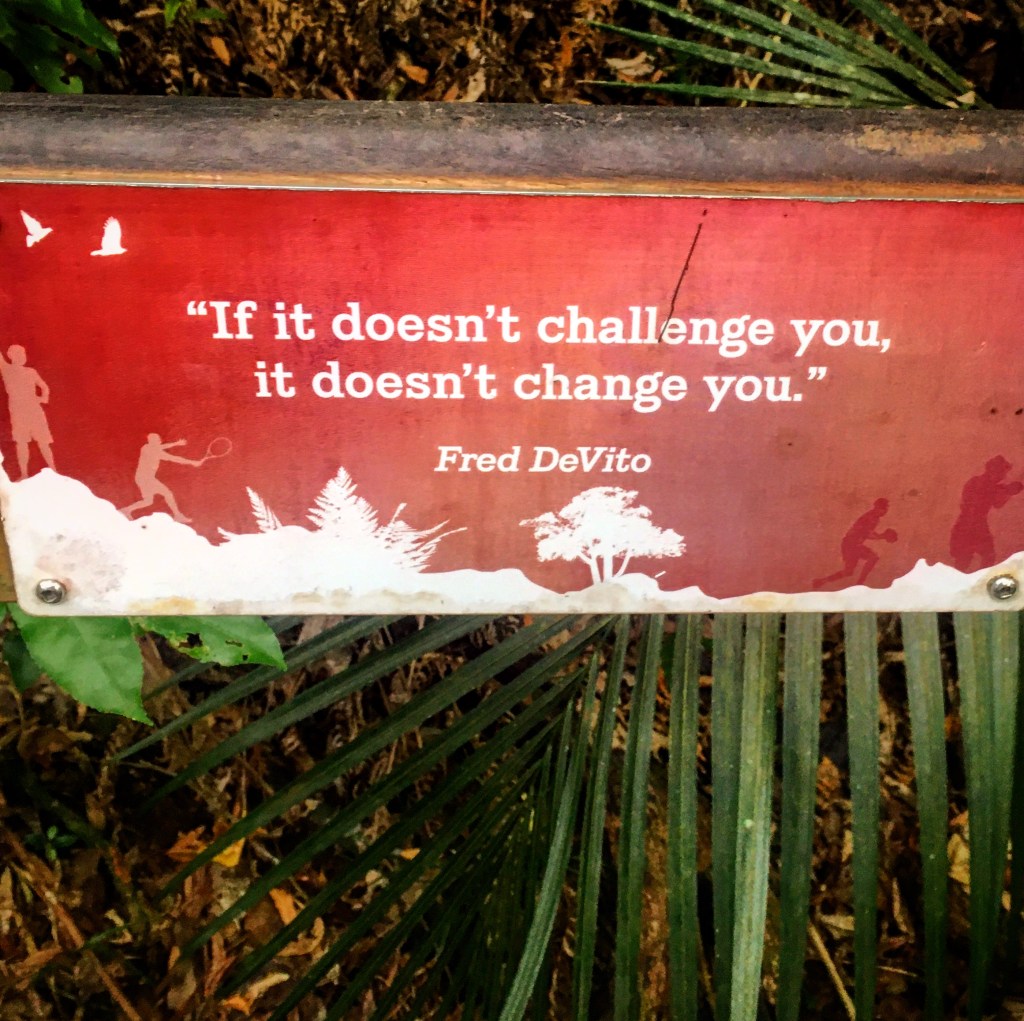
Challenge, Practice, Repeat…..Recover I hope.

Today was definitely helped by ‘Recovery Warriors” resources. Check out The Recovery Warriors app, website. They are currently holding a ‘holiday special” with lots of useful resources and videos etc. https://www.truewarrior.me/holiday-support

https://www.instagram.com/recovrywarriors/

Visit website
Photo by Karl Solano on Pexels.com

#accountability #anorexia #blog #bulimia #christmas #new year # new year resolutions # diet #advocacy #compulsive exercise #dietculture #eating disorder awareness #eating disorder recovery #eating disorder treatment #fitness trackers #HAES #intuitive eating #lapses #Neural rewiring #orthorexia #recovery #recovery belly #recovery lessons #recoverywarriors #relapse prevention #relapses #sociamedia #Stigma #therapy #unrestricted #weight stigma awareness BEAT body acceptance Body image EDANZ F.E.A.S.T fear Holidays mental health mirror-mirror NEDA nutritional rehabilitation ofsed perfectionism self compassion Self Help Weight gain weight redistribution

Re-reading old journal entries, anorexia recovery. What language does your ED voice use?

Reframe negative eating disorder thoughts

I’ve been journaling for a long time. I was re-reading an old journal, one I started in early recovery. I found there was a theme to the language I used to describe how I was feeling, or when journalling about behaviours.

It was all self critical. Extremely negative.

Common words I used: ASHAMED, DISGUSTED, LONELY, ANGRY, FAT. This was even when I’d documented small positive steps to change.

“I feel ashamed, I want to crawl out of my skin, I feel trapped, consumed & powerless. I’m disgusted I’ve allowed myself to get into this predicament. I don’t feel I deserve the help. It’s a spell I cannot break no matter how hard I try I’m stuck”

This was an entry I made a few weeks into recovery.

Comparing this to more recent entries, there’s none of the negative language. It’s incredible how consuming our eating disorders are, they overshadow us, they thrive on secrecy and feed the feelings of isolation and shame grows and grows.

Now that I’m much further into recovery, I can seperate this unkind voice from my own, kinder, compassionate in built healthy self voice. I do not allow myself to use language such as ashamed, disgusted, instead I reframe them and ask myself what I’m needing. Why the ‘HH’ voice is spouting these terms. If I have a thought that sounds hypercritical I know it’s coming from ‘HH’ and not me, and serves no purpose in driving my recovery.

Self compassion is difficult in early recovery because we are listening to the negative thoughts. But as we grow stronger in recovery it’s easier to be kinder to ourselves. Something we have to re-learn to do. After being the opposite for so long. It feels uncomfortable. But anything in recovery that’s uncomfortable is good.

I found it hard to do NOTHING. Or pause have a cup of tea when I felt tired, or allow myself to feel emotions. But with time, one of my favourite pass times is to sit and literally do nothing with a cup of tea ( and most often a chocolate hobnob) Yes I am English and do believe this solves everything. I never thought that weekend early in recovery I would be able to to do that. I thought ‘HH’ would berate me for sitting for a second. Sure, there are days where I do hear the negative utterances. But the difference is now I don’t turn against myself, I don’t tell myself I’m ashamed of myself, not deserving etc. I tell myself I am worthy, I can live however I want and I don’t have to listen to the thoughts. I am not those thoughts. What thoughts do you need to re-frame?

Reflecting on Christmases past, present and Christmas future in anorexia recovery

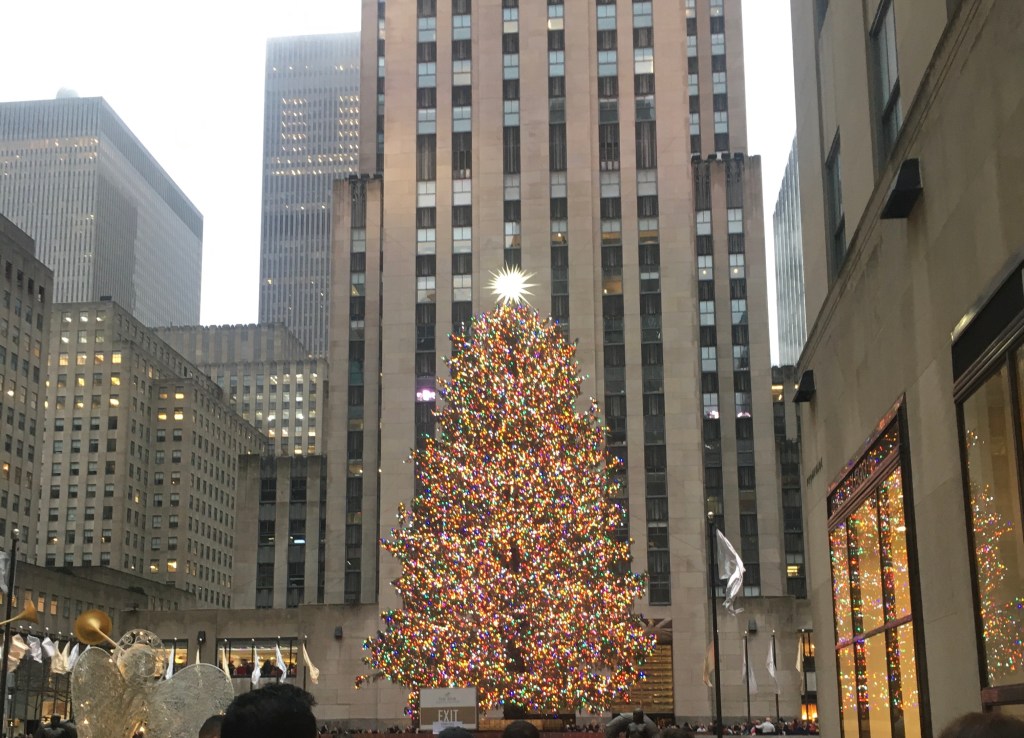
Rockerfeller tree. ED freedom

This time last year, I was getting both excited and off the chart anxious about surprising my family in the UK for Christmas, with a holiday on the way via New York.

So much has happened over the past 12 months. We couldn’t go and do this now even if we wanted to. COVID-19 has changed everything for everyone.

We were lucky we could make this trip last year. However I think we become increasingly reflective in our recovery. We have to I believe, to make sure we don’t become complacent and let the foot slip off the gas of progress and allow ourselves to slip backwards. SO naturally this means we reflect on where things lie. I have been thinking about last year’s trip a lot these past few weeks, partly because my family bring it up at every zoom chat and partly because we are making plans for this Christmas.

I can see how far I have come during this time. I felt more dread and fear around the whole trip than I did excitement. How fucked up is that?! I have always loved Christmas and a massive dream was to visit New York at Christmas time. My family Christmases have always been epic and I hadn’t spent Christmas with my family for 8 years so it was going to be special.

Uptight and not present…

Seeing the Rockerfeller tree, snow in Central Park, Macy’s displays was magical. But something still felt missing. ME. I wasn’t really present. It was like I was observing someone else experiencing what I’d always dreamed of. I sat feeling the coldest I had ever felt at a Soccer game, worrying about what we’d eat, how I’d compensate. Fixating on what my families reactions would be having not seen me for ages. Worrying about the Christmas dinners, socials it went on and on.

Then the Christmas itself- I felt numb and empty and so sad. It was not the reunion, surprise I envisioned. I was stressed the whole time, controlling everything. I wanted nothing more than to make last Christmas special, happy. But I hadn’t really committed to recovery at this point, so I had set myself up for a difficult time. Which was unnecessary.

Reflecting on progress…Now fast forward 12 months- I don’t act on ED behaviours, we are spending Xmas with friends this year. I have worked hard to be here, I have so much more freedom with each day. I’m not worrying about this Christmas, I’m looking forward to it. Looking forward to being present, being relaxed and not a controlling freak who has to micromanage everything. But this brings me sadness too. I cannot share this with my family. I cannot show them how things have changed. I hate that, the memory that should have been really special I allowed my ED, yet again to dominate, dictate and taint.

This brings me on to my next point, I know in order to get here, to keep moving forward so that I will be able to share happy holidays with my family again, I have to make a conceited effort every day to make positive steps. If you had have asked me 12 months ago, what does recovery mean, I didn’t really have a clue. I remember my therapist asked me to write down what recovery meant. However, I think at the beginning of recovery we don’t know because we are still overshadowed by our ED personality. Not so much our healthy self. I think it’s important to think about this early on, but I’m not surprised my list is different now. For starters 1 thing that is on my list of full recovery means, being able to spend time with family without any ED anxiety, complete freedom. Being able to travel without any compensation, anxiety about eating a different routine. Not being bothered by other peoples comments pertaining to my food, appearance, diets bla bla. So many more.

But in the early days it was two dimensional and clearly written by “HH”: I.e I don’t want to be cold, develop healthy relationship with exercise etc.

I think we grow in every sense as we recover. I have a far better understanding of who I am now. So in short reflection helps us to continue forward.

These would have given me so much anxiety a year ago. Now they’re just yum.

Weight gain in eating disorder recovery

Recovery belly

For most of us recovery means committing to weight gain. Learning to accept our bodies unsuppressed natural weight. Getting there has for me been far harder than simply just putting on weight. It’s weight we were never meant to have lost, our bodies didn’t want us to lose this weight but learning to accept this doesn’t happen overnight. We taught it that losing weight feels good, gaining weight feels bad. We taught our brains to believe “skinny = happy” but we know this isn’t the truth. I was never more unhappy than when I was at my sickest. My emotions blunted, isolated from friends, family and bound by strict rules that my life revolved around. No I was not happy. I was a ghost.

But that doesn’t mean accepting weight gain was/ is easy. It’s going against everything I’ve taught myself to believe is ideal. The weight restoration phase on ED recovery is a small part but is so painful because of our neural pathways and our beliefs and distortions.

Weight restoration is messy. I think if no one has told you, now is a good time to tell you. When you gain weight after waging war against your body, your body no longer trusts you. Whether this is from diet cycling, restriction, purging or over exercising. Your body likes to be in homeostasis and sits at a steady weight when left to its own devices. But when we intervene everything slows down, the body has a massive freak out. It thinks its starving (which in many of our cases it literally is) and when we start eating again the body is like, oh thank fuck. It holds on to everything initially in case we are cruel enough to inflict war on it again. The most common place this extra weight/ fat goes to is the tummy a.k.a the “recovery belly”. You can easily look 6 months pregnant. I look pregnant now. Staving off unwanted comments can be an unwanted side effect. But if this happens it’s because you are recovering and doing well so don’t give in. This is hard. My belly has been here a while and likely It’s here to stay for a while yet. I have made peace with it, doesn’t mean I don’t freak out when I see it in reflections some days. Today has been a hard day. But I know it’s keeping me alive and acts as a reminder to not go backwards and the progress I’m making. I know it will redistribute and if it doesn’t well then I’ll learn accept that too. I did a lot of googling when I started my weight restoration journey and so I expect with time my body will trust me once more, so long as I am kind to it.

Doesn’t matter how much I hated how I looked at my sickest, I was still terrified of weight gain. I have had to and am working very hard on rewiring this fear. By challenging it every day. This has involved many melt downs, sobbing in the shower but it’s so much easier with time as your brain shifts with you. This takes a bit of time.

Ditch the scales..

Ditch the scales. They are not your friend. You should break up with this unloving/ non compassionate partner, it’s a one sided relationship. ( *There may be times where you have to be weighed for medical reasons) this does not mean YOU need to know your weight. If this scenario occurs request it to be blind, because no matter what the number, it will not serve your recovery but it will fuel your ED.

My relationship with the scales was messy, unforgiving. In my depths of my ED, I would live my days by the number in the morning. It would stipulate whether I was going to have a good day or bad day, whether I deserved to eat. I would weigh myself multiple times a day and go to great lengths to do it. In early recovery I used it as an excuse I was making progress. BULLSHIT, I was still using it as an excuse not to gain “too fast”, “too much” this is not recovery.

You do not need to deserve to eat. Eating is a necessity every one shares. Your weight does not define you. It is a number. It means nothing in relation to health, your worth. So ditch them. I binned mine. I have no idea what I weigh now. It’s not relevant because I am getting healthy. Sure in early recovery teams may need to know our weights. We do not. Be free and kind to yourself.

Ditch the things that are holding you back in ED recovery

Fitness trackers. These are not our friends in ED recovery. I do not think anyone with an ED history should EVER wear a fitness tracker watch etc. similarly to the scales my day revolves around steps, calories burned, moving raising my HR bla bla bla. Why would you need it unless training for an Olympic event? I don’t even really see the necessity for my patients because if they have problems with HR etc it’s monitored formally. So like my scales I binned my watch. It wasn’t easy but it will be liberating I assure you.

So I hope if this resonates you can make some changes and move forward. You deserve better. Your worth cannot be defined by a number.

Clothes shopping in eating disorder recovery…

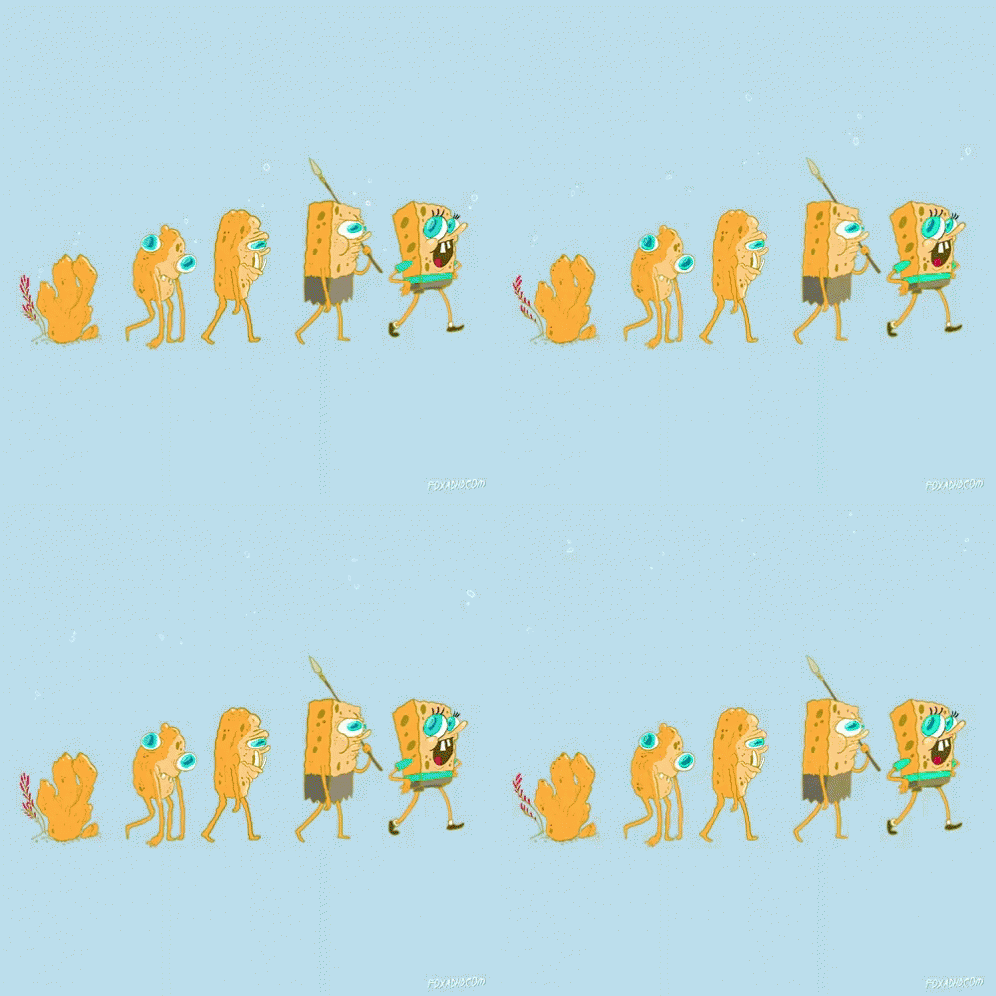
Phases of clothes shopping through recovery is Like “the origins of man” demonstrated by this spongebob gif!

I went clothes shopping last week. No one tells you how hard this experience is in recovery.

I decided to charity shop my “skinny” clothes. I will never need them again. It’s almost like a grieving process. I never liked how I looked at my lowest weight. I was self conscious. But buying small clothes was something my ED used as targets. Although I never felt better when I met them. I actually felt worse and worse, especially when nothing actually fit. When I started gaining weight, “HH” freaked out. Suddenly nothing fit and I felt self conscious all over again.

EDs will try and make you hold on to old behaviors or reminders of it. For me it was keeping these clothes “just in case” but they were holding me back. How can you recover with the thought you might one day fit in the clothes that fit when you are nowhere near your natural body shape or size. You can’t stay there. Not healthily anyway.

Buying clothes throughout the “weight restoration phase” is traumatic. I would recommend if you’re going through it, you don’t do it alone. It’s triggering no matter how far in you are or how committed. I would say this corresponds to the third picture in the gif. You are in no mans land. You’re not in the emaciated shell, you have fat in weird places so it’s hard to find things that fit and feel comfortable.

I went with a friend I could trust and my husband. I asked them to ask me questions like, how I felt in the clothes rather than making comments about appearance or fit. I looked for clothes I’d feel comfortable in at this stage in my recovery where my weight isn’t evenly distributed. Clothes that would accentuate other features that I’m less insecure with. For me this was flowy dresses. I have spent a long time in clothes hiding my weight for the other reason. I don’t want to hide my shape at all now, but I do want to feel comfortable. ‘HH’ longs for the old clothes but healthy me sees it a triumph of how far I’ve come.

You don’t have to like your body, I have become relatively neutral towards it. However uneven distribution, clothes shopping with size tags, mirrors is not fun. I also only bought a few things I really needed rather than a whole new wardrobe.

I didn’t do it all at once and checked in regularly. I talked through my HH thoughts with my psychologist.

Last week I went shopping on my own. It wasn’t that hard. It doesn’t need to be hard. Plan what you need, check in with your support and look after yourself.

Reckon this stage 4th sponge bob on the gif. Powering through, accepting the changes. Grateful for what you can do in your body and with your recovered body. Don’t think it’s necessary to love your body but if you do that’s a win and definitely the last sponge bob on the gif.

When will I be done?! Anorexia recovery

If you’ve read my “About page” you know how my eating disorder started.

Let’s get real about some things I wish I’d known when I started recovery. I hope being for-warned is forearmed.

When I finally sought help, I couldn’t bring myself to acknowledge or repeat the diagnosis I was given Anorexia nervosa, restrictive type.
My therapist was patient, despite my denial. She normalised the name, she used the term anorexia as if it was as routine to her as me diagnosing my patients with asthma, diabetes- no judgement. And really why should it be any different. But still, It felt dirty and shameful, I know now this was the ED talking. The ED does that, makes you think it’s your fault that your eating disorder does not deserve the same care or compassion any other diagnosis would. It’s a choice right? You can stop anytime. If you could- it’s not an eating disorder, eating disorders lull you into a false state of security and control. You think you are in control. But when asked to stop, why can’t you? Because you are unwell, you are not in control, it’s not your fault and it’s not a choice. Recovery is a choice. It is the best choice you will ever make.

After I was officially diagnosed with anorexia, orthorexia, perfectionism and over exercising my first question was; if what you say is true, when will I be done?

SO WHEN WILL I BE DONE?

This is a common question I’ve come to learn many of us ask. You will be done when you are done. Some people’s recovery takes months, some much longer, years. BUT I think the most important take home from this is, this is your journey, no one can tell you “when you’ll be done”

“your worst day in recovery is never as bad as your worst day in the ED” .

If I think I’m having a bad day, be it loud “HH” thoughts, criticism or self image, I remind myself of how far I’ve come and repeat this phrase. Thankfully the “HH” thoughts are now just a mere fleeting whisper in the wind.

Who knows how much healing you have to do, physically & mentally. The years, months of damage you’ve done by going into war with your body. But one thing is true…each step towards recovery gets easier, each step outside of the grips of your ED. Each positive step is a little bit further than the day before. I heard this phrase early in my recovery and I think there is nothing more true:

The next thing that I wish I knew when I first started recovery…

RECOVERY IS NOT LINEAR, it is NOT PERFECT

Since then I’ve had some pretty big lapses and one full relapse. But I learnt from them. I feel stronger for them.

Slips happen. It’s how you get over them that counts.

3. Recovery is hard.

There are many things we are told about when starting recovery, looking out for signs of refeeding syndrome ( metabolic disruption when nutrition is reinstated, can be life-threatening), but no one tells you: Healing is painful. It will always get worse before it gets better. But it does get better. Stick with it.

The oedema, the irratic bowels, bloating, nausea, fluid retention, acne, night sweats, second puberty, growing pains, awakening of your numbed emotions ( often leading to a clusterfuck of emotions all at once without warning), the changing body shape, uneven weight distribution. I will write a seperate post on this. I think this is a blog in itself. It takes strength to recover, it is easy to continue in what comes easily and takes a lot of unlearning of many beliefs and behaviours. It’s exhausting. BUT IT GETS better. It’s also not complicated. Food is medicine. Resting is healing. These are just a few things I wish I’d known early on in the recovery process. There’s many more thing’s iv’e learnt along the way that have been helpful, some not so much. I intend to share these on this blog, hopefully by sharing my experience you may find something to help you in your recovery.

Sharing is promoting awareness and I hope changing the stigma.

My Story.

Chances are if you’ve stumbled upon this page, you’re like me. Searching for answers, help, validation, recovery from an unhealthy relationship with food, body image. Other wise you would not be here. Maybe you still tell yourself , you’re fine and don’t have a problem, but looking for recovery blogs/ sites is not normal. Or, perhaps you know you have a problem with food, exercise, restriction, body image and you want to RECOVER.

There is no shame in asking for support…

Whether you are contemplating seeking help for starting recovery or just needing extra support in recovery, there is NO shame in this.

My mother in-law reminded me of this just this week. I just came off nights. ( I am a doctor). During those nights I received a nightly text from her “ have you stopped and snacked yet, it’s very important munchkin” I am incredibly grateful for this, this love and support really helped in moments where it could have been easy to listen to the ED voice. There are times like nights, times of stress and busyness where I need a little support and I’m not ashamed. On these days I celebrate little victories and focus on gratitude, like how grateful I am to have this person rooting for me.

Eating disorder recovery is hard. It is the hardest thing I have ever done, likely the hardest thing I will ever do.

Anorexia crept into my life slowly and in a surreptitious manner. It took me a long time before I saw it there and I remained in denial for even longer.

I became a hollow shell of myself. My eating disorder overshadowed my entire being.

I started running when I was 11, this was my happy place. I had always been a happy, bubbly easy going child. I first recall feeling uncomfortable in my skin when I was mid teens, following comments from some boys at school about my ‘muscled arms’. It didn’t lead to me doing anything about it and I also didn’t really care about being thin at this time. I suppose the comment began to chip away at my subconscious and wear me down. Eventually athletics training became a way I could hide my disorder.

I remember becoming very health conscious and cutting food groups out of my diet as early as 14, I deemed bread and chips to be “unhealthy” and I cut them out of my diet. I was confused at the time why I was doing this, but I passionately believed this was the right thing to do and I remember telling my parents I no longer ate bread or chips because “I didn’t like them”. The first time I noticed my rigidity was a family holiday and instead of enjoying these foods I refused them despite my best friend at the time and parents trying to persuade me otherwise and I remember feeling “clean” and “good” for refusing. It became an addiction. Restriction became my drug.

This would become my norm and increasing rules and rituals cemented.

I was tired all of the time, I underwent extensive medical tests, yet my eating disorder at this time remained hidden from the spot light. I was diagnosed with a bone marrow disorder and this further overshadowed my eating disorder and fueled my need to control.

I would force myself to attend athletics training sessions despite feeling exhausted. I would eat right before training, knowing full well it would make me sick during the practice, and I would be praised for working hard.

No one could have stopped it happening. And the shitty thing about eating disorders by the time they are recognized they are already entrenched.

It wasn’t until almost a decade later when my eating disorder had robbed me of my personality and my health, I was forced to confront my demons. By now I was working as a medical doctor and there were times where in order to make important patient decisions it would take up any remaining energy I had left.

There were times where my vision would blur when I stood, if I stood for long periods or too fast I would pass out. Still I refused to acknowledge the eating disorder’s presence.

No matter the appointments I attended, the eating disorder was so entrenched in me by this time I was still losing weight. The eating disorder would gaslight me, telling me I didn’t actually have a problem, it wasn’t a big deal. My mental state was deteriorating. The smaller I got, the narrower and more warped my view of the world became.

Threatened with being sectioned I knew I needed to fight for something.

My husband was incredibly supportive and so determined to help me get better. I wanted so much to make him happy and give him back a life, and so I fought. I fought for him until I had the motivation to fight for myself.

Everything goes on hold when you are battling an eating disorder or supporting a loved one.

My husband would leave work at the drop of a hat to attend appointments and support me at meal times.

Life paused because of my eating disorder. The shame and guilt of this is insurmountable and weighs heavy. The only way I could improve this, was to fight for my recovery and get better. And so I fought. Sometimes I fought bite by bite, meal by meal. Eventually it becomes less of a battle.

Sadly there is very little in my history that is unique because those of us that have been through an eating disorder share many similarities.

One thing I am aware of, was my privilege to seek help, when so many others are not so fortunate. It was through seeing this I found a new motivation of recovery, to give back. To use what I had learnt in a productive way to help others. This is one of the reasons I started this blog. Reading other people’s lived experience has been so instrumental in my own recovery.

I was so buried in my eating disorder I believed that was my brain. It’s a brain that goes against everything you believe in and convinces you it’s the only thing that matters. It convinced me my life’s purpose was to count numbers, control my intake, shrink my body and my worth was measured solely on rigidly following these. It made me believe there was no life beyond this.

There were times where, I was terrified of carbs, which became dairy, which became fats and ultimately food. Literally every food group became terrifying. Thank you diet culture, I say with upmost venom behind that.

One of the ways of overcoming my eating disorder misconceptions was learning why I needed each food group. Removing any vocabulary that demonized any food. Seeing all food as equal. Bite by bite this became easier. There are still times where my eating disorder tries to complicate things, to lure me back to believe the fears. I remind myself of my truth and my reason for fighting in these moments. I reject diet culture in all forms.

Developing confidence in my own decisions around food and body and knowing what I am doing has been huge in my recovery. I am no longer being reliant on a team. I am trusting myself more with each day.

Our lives have gradually returned to “normal” if not more enriched for the struggle we have overcome. Life holds so much value to me now, having nearly lost it I’m incredibly grateful to be here.

One of the worst parts of starting recovery was telling my parents. It took me so long to muster up the courage to talk to them about it. I was so afraid of their disappointment, they wouldn’t understand and would make me feel I had done something wrong. One thing I have learned is you don’t need people to understand, because, realistically very few can unless they have walked the path of an eating disorder. Support and love & compassion are qualities that really assist you. Learning to forgive yourself and set boundaries to build your close support network is something I have worked on during the recovery process.

Finding my voice in recovery has taken away much of the eating disorder’s power. It felt like each person I told I regained power. It forced the darkness of the eating disorder into the light. Removing a lot of the secrecy, shame and associated isolation. Having the eating disorder out in the open has forced me to be accountable. Sharing my struggle has given me the biggest gift of connecting with others.

I feel thankful to be here.

There is nothing about recovery I regret other than I didn’t choose it sooner. I promise it is worth the work and you won’t regret recovering.