Reflecting on Christmases past, present and Christmas future in anorexia recovery

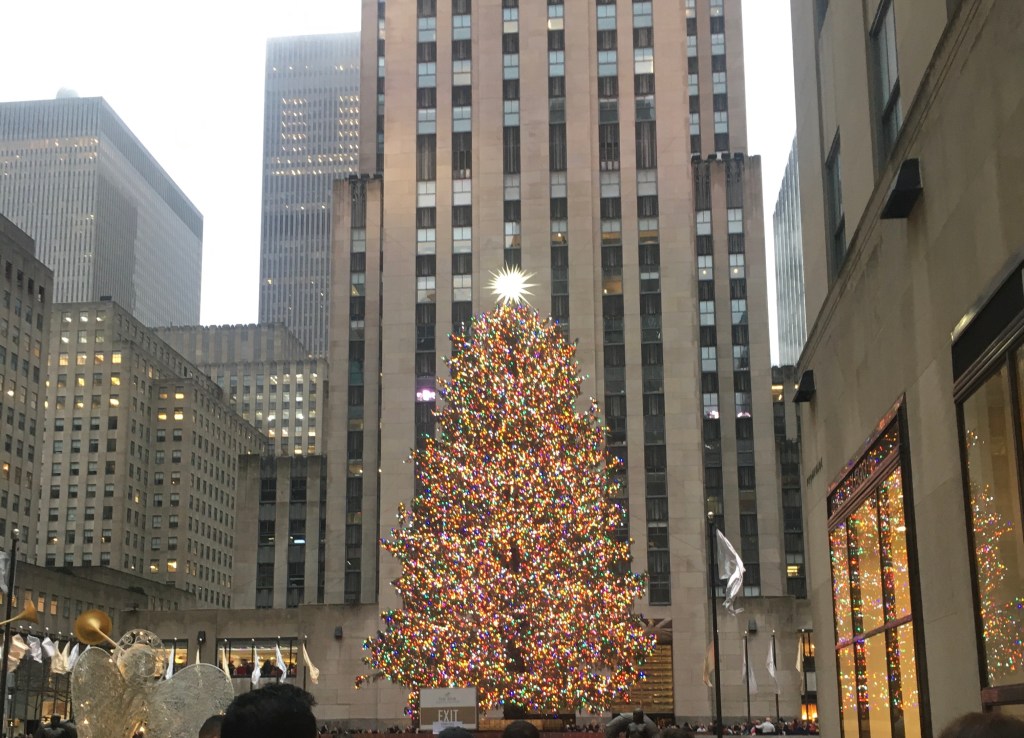
Rockerfeller tree. ED freedom

This time last year, I was getting both excited and off the chart anxious about surprising my family in the UK for Christmas, with a holiday on the way via New York.

So much has happened over the past 12 months. We couldn’t go and do this now even if we wanted to. COVID-19 has changed everything for everyone.

We were lucky we could make this trip last year. However I think we become increasingly reflective in our recovery. We have to I believe, to make sure we don’t become complacent and let the foot slip off the gas of progress and allow ourselves to slip backwards. SO naturally this means we reflect on where things lie. I have been thinking about last year’s trip a lot these past few weeks, partly because my family bring it up at every zoom chat and partly because we are making plans for this Christmas.

I can see how far I have come during this time. I felt more dread and fear around the whole trip than I did excitement. How fucked up is that?! I have always loved Christmas and a massive dream was to visit New York at Christmas time. My family Christmases have always been epic and I hadn’t spent Christmas with my family for 8 years so it was going to be special.

Uptight and not present…

Seeing the Rockerfeller tree, snow in Central Park, Macy’s displays was magical. But something still felt missing. ME. I wasn’t really present. It was like I was observing someone else experiencing what I’d always dreamed of. I sat feeling the coldest I had ever felt at a Soccer game, worrying about what we’d eat, how I’d compensate. Fixating on what my families reactions would be having not seen me for ages. Worrying about the Christmas dinners, socials it went on and on.

Then the Christmas itself- I felt numb and empty and so sad. It was not the reunion, surprise I envisioned. I was stressed the whole time, controlling everything. I wanted nothing more than to make last Christmas special, happy. But I hadn’t really committed to recovery at this point, so I had set myself up for a difficult time. Which was unnecessary.

Reflecting on progress…Now fast forward 12 months- I don’t act on ED behaviours, we are spending Xmas with friends this year. I have worked hard to be here, I have so much more freedom with each day. I’m not worrying about this Christmas, I’m looking forward to it. Looking forward to being present, being relaxed and not a controlling freak who has to micromanage everything. But this brings me sadness too. I cannot share this with my family. I cannot show them how things have changed. I hate that, the memory that should have been really special I allowed my ED, yet again to dominate, dictate and taint.

This brings me on to my next point, I know in order to get here, to keep moving forward so that I will be able to share happy holidays with my family again, I have to make a conceited effort every day to make positive steps. If you had have asked me 12 months ago, what does recovery mean, I didn’t really have a clue. I remember my therapist asked me to write down what recovery meant. However, I think at the beginning of recovery we don’t know because we are still overshadowed by our ED personality. Not so much our healthy self. I think it’s important to think about this early on, but I’m not surprised my list is different now. For starters 1 thing that is on my list of full recovery means, being able to spend time with family without any ED anxiety, complete freedom. Being able to travel without any compensation, anxiety about eating a different routine. Not being bothered by other peoples comments pertaining to my food, appearance, diets bla bla. So many more.

But in the early days it was two dimensional and clearly written by “HH”: I.e I don’t want to be cold, develop healthy relationship with exercise etc.

I think we grow in every sense as we recover. I have a far better understanding of who I am now. So in short reflection helps us to continue forward.

These would have given me so much anxiety a year ago. Now they’re just yum.

Clothes shopping in eating disorder recovery…

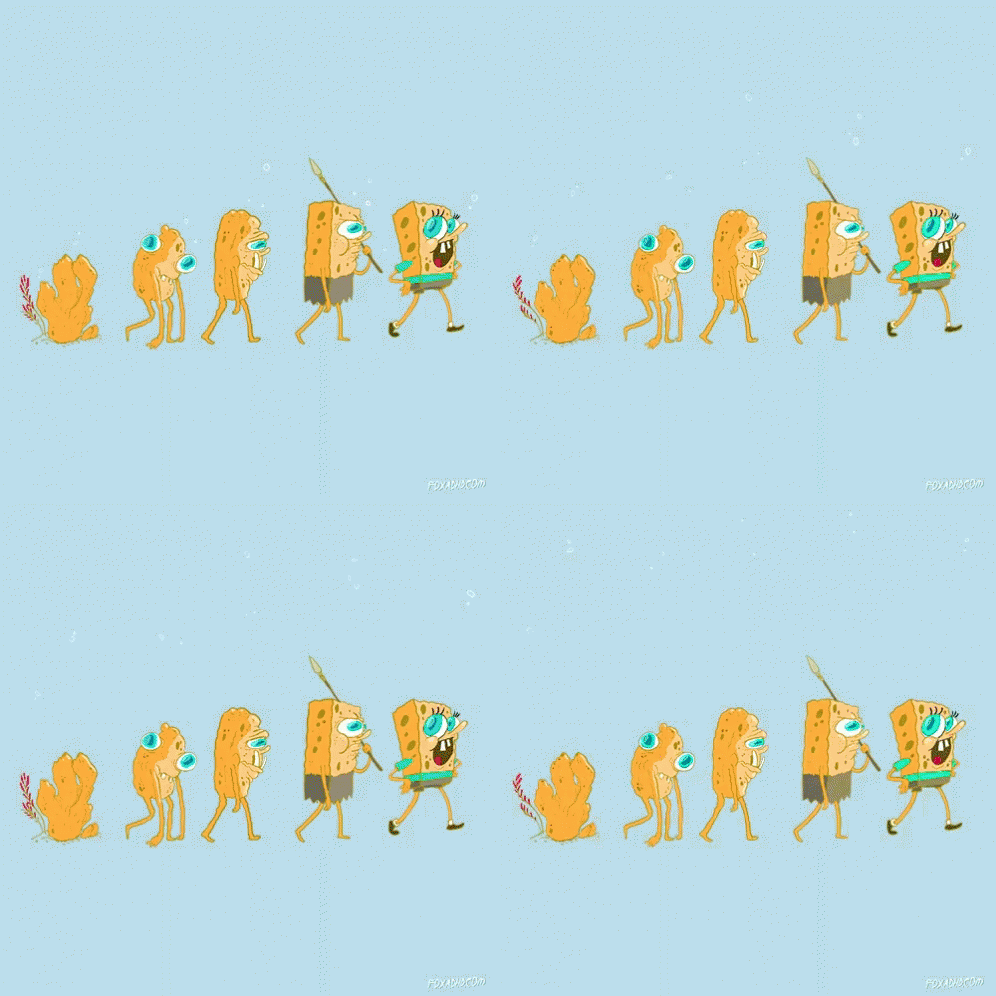
Phases of clothes shopping through recovery is Like “the origins of man” demonstrated by this spongebob gif!

I went clothes shopping last week. No one tells you how hard this experience is in recovery.

I decided to charity shop my “skinny” clothes. I will never need them again. It’s almost like a grieving process. I never liked how I looked at my lowest weight. I was self conscious. But buying small clothes was something my ED used as targets. Although I never felt better when I met them. I actually felt worse and worse, especially when nothing actually fit. When I started gaining weight, “HH” freaked out. Suddenly nothing fit and I felt self conscious all over again.

EDs will try and make you hold on to old behaviors or reminders of it. For me it was keeping these clothes “just in case” but they were holding me back. How can you recover with the thought you might one day fit in the clothes that fit when you are nowhere near your natural body shape or size. You can’t stay there. Not healthily anyway.

Buying clothes throughout the “weight restoration phase” is traumatic. I would recommend if you’re going through it, you don’t do it alone. It’s triggering no matter how far in you are or how committed. I would say this corresponds to the third picture in the gif. You are in no mans land. You’re not in the emaciated shell, you have fat in weird places so it’s hard to find things that fit and feel comfortable.

I went with a friend I could trust and my husband. I asked them to ask me questions like, how I felt in the clothes rather than making comments about appearance or fit. I looked for clothes I’d feel comfortable in at this stage in my recovery where my weight isn’t evenly distributed. Clothes that would accentuate other features that I’m less insecure with. For me this was flowy dresses. I have spent a long time in clothes hiding my weight for the other reason. I don’t want to hide my shape at all now, but I do want to feel comfortable. ‘HH’ longs for the old clothes but healthy me sees it a triumph of how far I’ve come.

You don’t have to like your body, I have become relatively neutral towards it. However uneven distribution, clothes shopping with size tags, mirrors is not fun. I also only bought a few things I really needed rather than a whole new wardrobe.

I didn’t do it all at once and checked in regularly. I talked through my HH thoughts with my psychologist.

Last week I went shopping on my own. It wasn’t that hard. It doesn’t need to be hard. Plan what you need, check in with your support and look after yourself.

Reckon this stage 4th sponge bob on the gif. Powering through, accepting the changes. Grateful for what you can do in your body and with your recovered body. Don’t think it’s necessary to love your body but if you do that’s a win and definitely the last sponge bob on the gif.

When will I be done?! Anorexia recovery

If you’ve read my “About page” you know how my eating disorder started.

Let’s get real about some things I wish I’d known when I started recovery. I hope being for-warned is forearmed.

When I finally sought help, I couldn’t bring myself to acknowledge or repeat the diagnosis I was given Anorexia nervosa, restrictive type.
My therapist was patient, despite my denial. She normalised the name, she used the term anorexia as if it was as routine to her as me diagnosing my patients with asthma, diabetes- no judgement. And really why should it be any different. But still, It felt dirty and shameful, I know now this was the ED talking. The ED does that, makes you think it’s your fault that your eating disorder does not deserve the same care or compassion any other diagnosis would. It’s a choice right? You can stop anytime. If you could- it’s not an eating disorder, eating disorders lull you into a false state of security and control. You think you are in control. But when asked to stop, why can’t you? Because you are unwell, you are not in control, it’s not your fault and it’s not a choice. Recovery is a choice. It is the best choice you will ever make.

After I was officially diagnosed with anorexia, orthorexia, perfectionism and over exercising my first question was; if what you say is true, when will I be done?

SO WHEN WILL I BE DONE?

This is a common question I’ve come to learn many of us ask. You will be done when you are done. Some people’s recovery takes months, some much longer, years. BUT I think the most important take home from this is, this is your journey, no one can tell you “when you’ll be done”

“your worst day in recovery is never as bad as your worst day in the ED” .

If I think I’m having a bad day, be it loud “HH” thoughts, criticism or self image, I remind myself of how far I’ve come and repeat this phrase. Thankfully the “HH” thoughts are now just a mere fleeting whisper in the wind.

Who knows how much healing you have to do, physically & mentally. The years, months of damage you’ve done by going into war with your body. But one thing is true…each step towards recovery gets easier, each step outside of the grips of your ED. Each positive step is a little bit further than the day before. I heard this phrase early in my recovery and I think there is nothing more true:

The next thing that I wish I knew when I first started recovery…

RECOVERY IS NOT LINEAR, it is NOT PERFECT

Since then I’ve had some pretty big lapses and one full relapse. But I learnt from them. I feel stronger for them.

Slips happen. It’s how you get over them that counts.

3. Recovery is hard.

There are many things we are told about when starting recovery, looking out for signs of refeeding syndrome ( metabolic disruption when nutrition is reinstated, can be life-threatening), but no one tells you: Healing is painful. It will always get worse before it gets better. But it does get better. Stick with it.

The oedema, the irratic bowels, bloating, nausea, fluid retention, acne, night sweats, second puberty, growing pains, awakening of your numbed emotions ( often leading to a clusterfuck of emotions all at once without warning), the changing body shape, uneven weight distribution. I will write a seperate post on this. I think this is a blog in itself. It takes strength to recover, it is easy to continue in what comes easily and takes a lot of unlearning of many beliefs and behaviours. It’s exhausting. BUT IT GETS better. It’s also not complicated. Food is medicine. Resting is healing. These are just a few things I wish I’d known early on in the recovery process. There’s many more thing’s iv’e learnt along the way that have been helpful, some not so much. I intend to share these on this blog, hopefully by sharing my experience you may find something to help you in your recovery.

Sharing is promoting awareness and I hope changing the stigma.

My Story.

Chances are if you’ve stumbled upon this page, you’re like me. Searching for answers, help, validation, recovery from an unhealthy relationship with food, body image. Other wise you would not be here. Maybe you still tell yourself , you’re fine and don’t have a problem, but looking for recovery blogs/ sites is not normal. Or, perhaps you know you have a problem with food, exercise, restriction, body image and you want to RECOVER.

There is no shame in asking for support…

Whether you are contemplating seeking help for starting recovery or just needing extra support in recovery, there is NO shame in this.

My mother in-law reminded me of this just this week. I just came off nights. ( I am a doctor). During those nights I received a nightly text from her “ have you stopped and snacked yet, it’s very important munchkin” I am incredibly grateful for this, this love and support really helped in moments where it could have been easy to listen to the ED voice. There are times like nights, times of stress and busyness where I need a little support and I’m not ashamed. On these days I celebrate little victories and focus on gratitude, like how grateful I am to have this person rooting for me.

Eating disorder recovery is hard. It is the hardest thing I have ever done, likely the hardest thing I will ever do.

Anorexia crept into my life slowly and in a surreptitious manner. It took me a long time before I saw it there and I remained in denial for even longer.

I became a hollow shell of myself. My eating disorder overshadowed my entire being.

I started running when I was 11, this was my happy place. I had always been a happy, bubbly easy going child. I first recall feeling uncomfortable in my skin when I was mid teens, following comments from some boys at school about my ‘muscled arms’. It didn’t lead to me doing anything about it and I also didn’t really care about being thin at this time. I suppose the comment began to chip away at my subconscious and wear me down. Eventually athletics training became a way I could hide my disorder.

I remember becoming very health conscious and cutting food groups out of my diet as early as 14, I deemed bread and chips to be “unhealthy” and I cut them out of my diet. I was confused at the time why I was doing this, but I passionately believed this was the right thing to do and I remember telling my parents I no longer ate bread or chips because “I didn’t like them”. The first time I noticed my rigidity was a family holiday and instead of enjoying these foods I refused them despite my best friend at the time and parents trying to persuade me otherwise and I remember feeling “clean” and “good” for refusing. It became an addiction. Restriction became my drug.

This would become my norm and increasing rules and rituals cemented.

I was tired all of the time, I underwent extensive medical tests, yet my eating disorder at this time remained hidden from the spot light. I was diagnosed with a bone marrow disorder and this further overshadowed my eating disorder and fueled my need to control.

I would force myself to attend athletics training sessions despite feeling exhausted. I would eat right before training, knowing full well it would make me sick during the practice, and I would be praised for working hard.

No one could have stopped it happening. And the shitty thing about eating disorders by the time they are recognized they are already entrenched.

It wasn’t until almost a decade later when my eating disorder had robbed me of my personality and my health, I was forced to confront my demons. By now I was working as a medical doctor and there were times where in order to make important patient decisions it would take up any remaining energy I had left.

There were times where my vision would blur when I stood, if I stood for long periods or too fast I would pass out. Still I refused to acknowledge the eating disorder’s presence.

No matter the appointments I attended, the eating disorder was so entrenched in me by this time I was still losing weight. The eating disorder would gaslight me, telling me I didn’t actually have a problem, it wasn’t a big deal. My mental state was deteriorating. The smaller I got, the narrower and more warped my view of the world became.

Threatened with being sectioned I knew I needed to fight for something.

My husband was incredibly supportive and so determined to help me get better. I wanted so much to make him happy and give him back a life, and so I fought. I fought for him until I had the motivation to fight for myself.

Everything goes on hold when you are battling an eating disorder or supporting a loved one.

My husband would leave work at the drop of a hat to attend appointments and support me at meal times.

Life paused because of my eating disorder. The shame and guilt of this is insurmountable and weighs heavy. The only way I could improve this, was to fight for my recovery and get better. And so I fought. Sometimes I fought bite by bite, meal by meal. Eventually it becomes less of a battle.

Sadly there is very little in my history that is unique because those of us that have been through an eating disorder share many similarities.

One thing I am aware of, was my privilege to seek help, when so many others are not so fortunate. It was through seeing this I found a new motivation of recovery, to give back. To use what I had learnt in a productive way to help others. This is one of the reasons I started this blog. Reading other people’s lived experience has been so instrumental in my own recovery.

I was so buried in my eating disorder I believed that was my brain. It’s a brain that goes against everything you believe in and convinces you it’s the only thing that matters. It convinced me my life’s purpose was to count numbers, control my intake, shrink my body and my worth was measured solely on rigidly following these. It made me believe there was no life beyond this.

There were times where, I was terrified of carbs, which became dairy, which became fats and ultimately food. Literally every food group became terrifying. Thank you diet culture, I say with upmost venom behind that.

One of the ways of overcoming my eating disorder misconceptions was learning why I needed each food group. Removing any vocabulary that demonized any food. Seeing all food as equal. Bite by bite this became easier. There are still times where my eating disorder tries to complicate things, to lure me back to believe the fears. I remind myself of my truth and my reason for fighting in these moments. I reject diet culture in all forms.

Developing confidence in my own decisions around food and body and knowing what I am doing has been huge in my recovery. I am no longer being reliant on a team. I am trusting myself more with each day.

Our lives have gradually returned to “normal” if not more enriched for the struggle we have overcome. Life holds so much value to me now, having nearly lost it I’m incredibly grateful to be here.

One of the worst parts of starting recovery was telling my parents. It took me so long to muster up the courage to talk to them about it. I was so afraid of their disappointment, they wouldn’t understand and would make me feel I had done something wrong. One thing I have learned is you don’t need people to understand, because, realistically very few can unless they have walked the path of an eating disorder. Support and love & compassion are qualities that really assist you. Learning to forgive yourself and set boundaries to build your close support network is something I have worked on during the recovery process.

Finding my voice in recovery has taken away much of the eating disorder’s power. It felt like each person I told I regained power. It forced the darkness of the eating disorder into the light. Removing a lot of the secrecy, shame and associated isolation. Having the eating disorder out in the open has forced me to be accountable. Sharing my struggle has given me the biggest gift of connecting with others.

I feel thankful to be here.

There is nothing about recovery I regret other than I didn’t choose it sooner. I promise it is worth the work and you won’t regret recovering.